The sport of Padel has a fascinating history that spans continents and decades. From its humble beginnings in Mexico to its global expansion, discover the journey of this dynamic racquet sport.
Padel History and origin
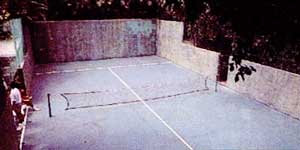
The sport of Padel traces its origins back to Mexico in the late 1960s when Enrique Corcuera, a wealthy Mexican businessman, created the game as a form of entertainment for his family and friends. Corcuera designed a smaller version of a tennis court enclosed by walls to keep the ball in play, thus creating the foundation for Padel.
Initially known as "Paddle Corcuera," the game gained popularity among Corcuera's social circle and eventually spread to other parts of Mexico and South America. Padel quickly became a favorite pastime, especially among the upper class, due to its accessibility and social nature.
In the 1970s, Padel made its way to Spain, where it experienced significant growth and evolution. Spanish entrepreneur Alfonso de Hohenlohe, a friend of Enrique Corcuera, introduced the sport to Spain after playing it in Mexico. Hohenlohe established the first Padel courts in Marbella, a resort town on the southern coast of Spain, and helped popularize the game among tourists and locals alike.
As Padel gained traction in Spain, the Spanish Padel Federation (FEP) was founded in 1979 to oversee the development and regulation of the sport. The FEP established standardized rules and guidelines for Padel competitions and worked to promote the sport at both the national and international levels.
Throughout the 1980s and 1990s, Padel continued to grow in popularity across Spain and other Spanish-speaking countries in Europe and South America. The construction of Padel courts became increasingly common, both in private clubs and public facilities, further contributing to the sport's accessibility and appeal.
In the early 21st century, Padel began to expand beyond its traditional strongholds and gain recognition on the global stage. International Padel Federation (FIP) was established in 1991, and in 2005, Padel was officially recognized by the International Olympic Committee (IOC) as a sport.
Today, Padel is played in over 80 countries worldwide and continues to experience exponential growth, particularly in Europe, Latin America, and Asia. The sport has evolved significantly since its inception, with professional circuits, international tournaments, and a thriving community of players at all levels.
The appeal of Padel lies in its accessibility, social nature, and dynamic gameplay. Played in doubles format on enclosed courts with glass walls, Padel combines elements of tennis and squash, offering players a unique and exhilarating experience. Its relatively simple rules make it easy for beginners to learn, while its fast-paced rallies and strategic gameplay keep experienced players engaged.
Overall, the history of Padel reflects its journey from a leisure activity among friends to a global sport embraced by millions. As Padel continues to evolve and expand, its rich history serves as a testament to its enduring popularity and appeal.