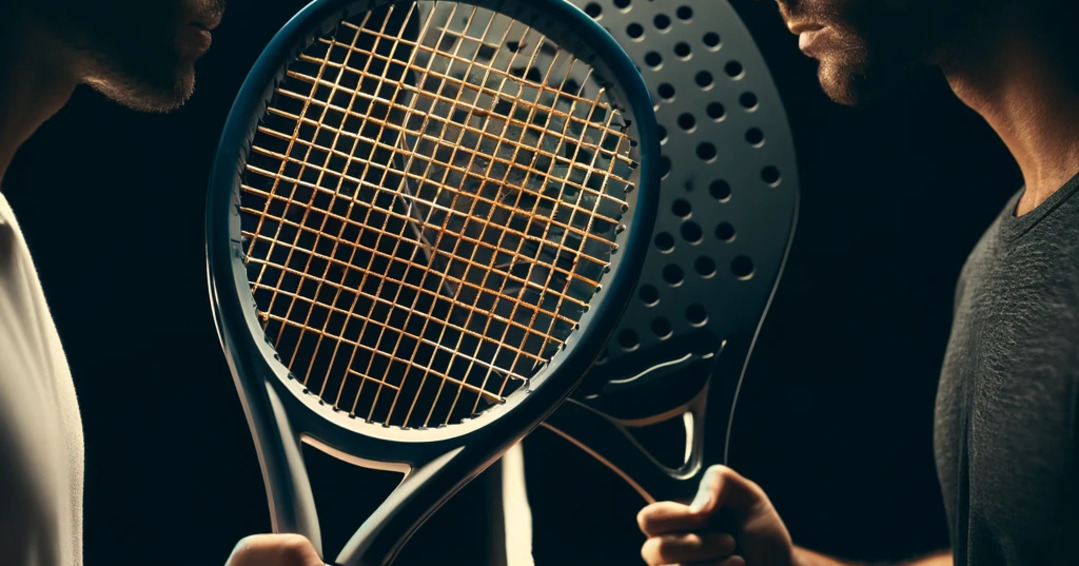
Dive into the Padel vs Tennis arena! Our comprehensive guide breaks down the distinctions between Padel and Tennis. From court dynamics to rules, discover the nuances that set these racquet sports apart. Whether you're a Padel enthusiast or a Tennis aficionado, this sporty exploration is your key to mastering the differences and elevating your game!"
Padel and Tennis: A Courtly Affair
The battlegrounds differ in the world of Padel and Tennis. While both involve a rectangular court, Padel courts are smaller and enclosed, featuring glass walls (sometimes concrete walls when there are older courts) and a mesh fence. Tennis courts, on the other hand, are more expansive with open surroundings. Each court has its own personality; let's explore their unique characteristics. Tennis also has more variation of surfaces which can really change the dynamics of the sport. The three most common surfaces are Hard Court, Clay and Grass. Padel basically always has the artificial glass surface, however the amount of sand is what makes the big difference between courts.
Serve it Up: Padel Rules vs Tennis Rules
Serving is a pivotal moment in both Padel and Tennis, but the rules vary. In Padel, players serve underhand, bouncing the ball off the ground before hitting it, whereas in Tennis, it's the classic overhand serve. Padel rules also dictate that the served ball can hit any of the court glass walls after the bounce and still be in play, adding a dynamic element absent in traditional Tennis.
Rallying Dynamics: Padel vs Tennis Volleys
Rallies and volleys unfold uniquely in Padel and Tennis. Padel, with its glass walls, encourages strategic use of rebounds, making rallies dynamic and unpredictable. In Tennis, the game relies more on court coverage and precise volleys. The differing playing styles add a layer of complexity that players of both sports must master.
Padel Court Scoring vs Tennis Scoring
The scoring systems are essentially identical between Tennis and Padel. Each match is played in the best of three sets. However, there are exceptions to the basic rules in certain tournaments and tours. The World Padel Tour introduced the so-called Golden Point a few years ago – a decisive point when the score is 40-40 in a game. This change was implemented to prevent some matches from lasting several hours under the traditional Advanced rule. In amateur Padel, the application of this rule may vary. It's essential to discuss and agree with your teammates and opponents on whether to use this rule or not.
In Tennis, there are tournaments where matches are played in the best of 5 sets. Examples of these include the four Grand Slam Tournaments for Men: the Australian Open, Roland Garros, Wimbledon, and the US Open.
Learn more about Padel Rules here
Padel vs Tennis: Finding Your Racket Passion
In the Padel vs Tennis showdown, your racket sport preference is personal. Padel offers the excitement of dynamic rebounds, a smaller court, and underhand serves. Tennis, with its expansive court and classic overhand serves, embodies a different kind of elegance. Whether you're a Padel enthusiast or a Tennis aficionado, the choice is yours. Both sports bring their unique charms to the court; find your rhythm and play on!
However, a common belief is that Padel is an easier sport for beginners compared to Tennis, which is likely one of the reasons for the sport's surge in popularity in recent years.
In the dynamic arena of Padel vs Tennis, understanding the differences is key to mastering both games. From court dynamics to playing styles, each sport has its unique flair. Whether you choose the enclosed thrill of Padel or the expansive elegance of Tennis, embrace the racket, conquer the court, and let your game be the ultimate winner!