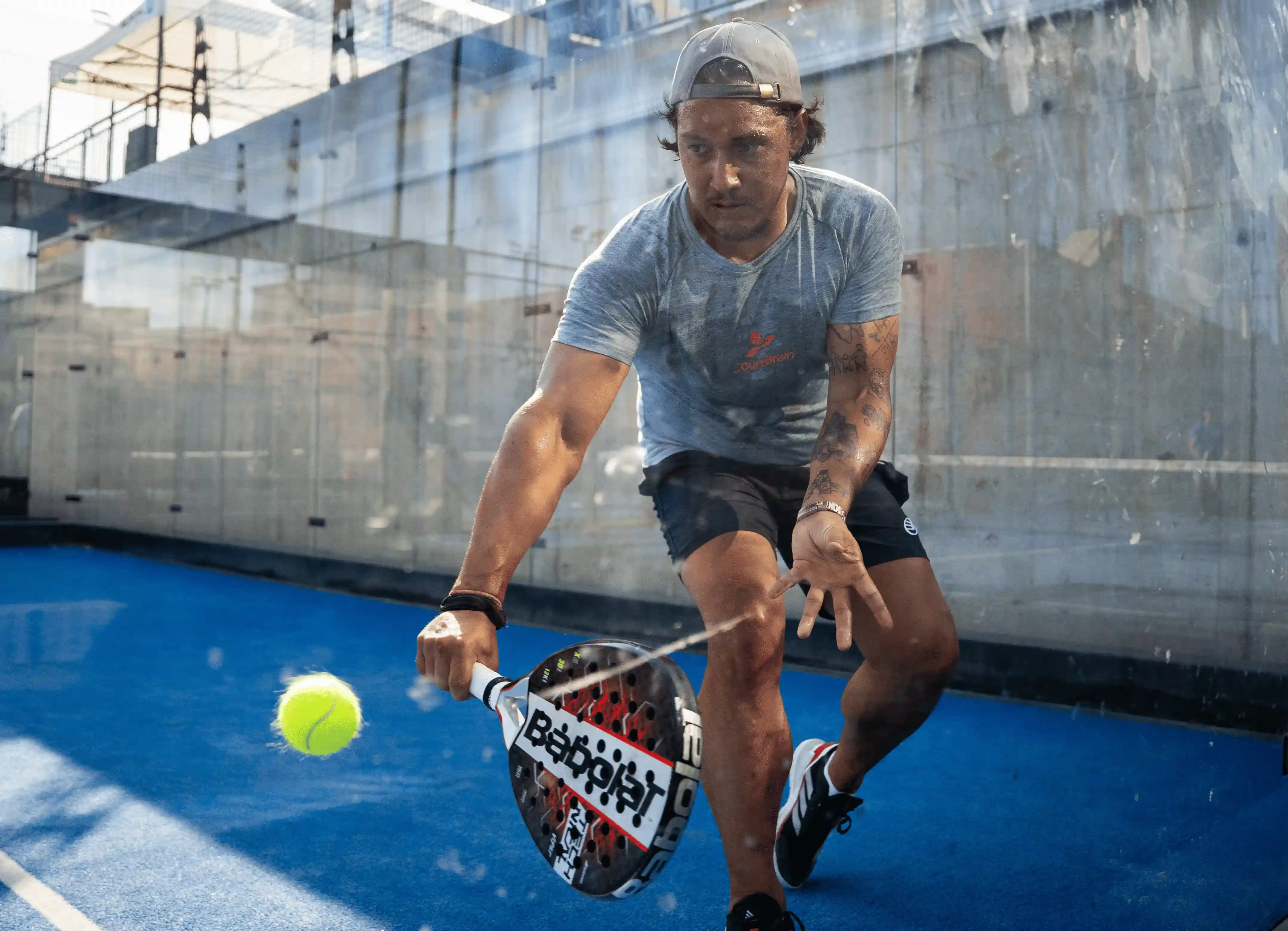
Buying a padel racket looks simple… until you stand in front of 50 options that all promise more power, more control, and more “feel.” The truth is: the best racket for you depends on how you play right now, not how a pro plays on YouTube. This guide walks you through the key things to check before you buy, in plain English, so you can pick a racket that helps you improve and enjoy the game more.
How to Choose which Padel Racket to buy
1. Start with your level (this matters most)
Before looking at shapes, materials, or buzzwords, be honest about your level:
- Beginner: You’re still learning how to hit clean shots and place the ball. You need control and comfort more than raw power.
- Intermediate: You can rally confidently, use the glass, and want a racket that gives a mix of control and power.
- Advanced: You play fast, attack often, and want a racket that matches your style (power, control, or a strong mix).
Why this matters:
A racket that is too hard, too heavy, or too “power-focused” for your level can make padel feel harder than it should. It may even cause arm or shoulder pain.
2. Choose the right shape
Padel rackets usually come in three main shapes. Shape affects control, power, and how easy the racket is to use.
Round shape
- Best for: beginners and control-focused players
- Feel: easy to handle, forgiving
- Why: the “sweet spot” is big and centered.
Sweet spot = the area on the racket face where the ball feels clean and controlled. Bigger sweet spot means fewer mishits.
Teardrop shape
- Best for: intermediate players
- Feel: balanced between control and power
- Why: sweet spot is still fairly large, but higher up for more punch
Diamond shape
- Best for: advanced or very aggressive players
- Feel: powerful but harder to control
- Why: sweet spot is smaller and closer to the top, so timing matters more.
Simple rule: If you want padel to feel easier and more consistent, go round. If you want a safe all-round choice, go teardrop. If you already play fast and attack a lot, diamond can work.
3. Weight: lighter is easier, heavier is more stable
Most padel rackets sit roughly between 340–390 grams.
Lighter (around 340–360 g)
- Easier to swing
- Good for beginners, smaller players, or anyone with elbow/shoulder issues
- Helps with quick reactions at the net
Heavier (around 370–390 g)
- More power and stability
- Better if you are strong, experienced, and like to hit hard
A heavier racket can feel great… until your arm gets tired in long matches.
4. Balance: where the weight sits
Balance is about where the racket feels heaviest:
Low balance (weight closer to the handle)
- Easier to control
- Quick to move
- Good for defense and beginners
High balance (weight closer to the top)
- More power on smashes
- Slower to react with
- Best for advanced attackers
If you don’t know what to pick, choose medium balance. It’s the safest option for most players.
5. Core softness: comfort vs. speed
Inside the racket is the core (the foam). This has a big effect on feel.
Soft core
- Comfortable
- Helps you generate power easily
- Ideal for beginners or anyone who wants a gentler feel
Hard core
- Faster response
- More precision if you hit well
- Better for advanced players who swing hard and clean
Some guides use the word EVA. EVA = a common type of foam used in padel racket cores. Soft EVA feels bouncy; hard EVA feels firm and fast.
6. Face material: fiberglass or carbon
The outer surface affects touch and power.
Fiberglass
- Softer feel
- Easier to control
- More comfortable
- Great for beginners and intermediate players
Carbon (or “carbon fiber”):
- Stiffer and more powerful
- More precise if you hit cleanly
- Usually for intermediate-advanced players
Think of fiberglass as “easy and friendly” and carbon as “fast and demanding.”
7. Surface texture: do you want more spin?
Some rackets have a rough surface.
- Smooth surface: more predictable, easier for beginners
- Rough surface: helps you add spin (curve/rotation on the ball) Spin can be useful, but it’s not necessary when you’re learning basics. If you’re still missing clean hits, focus on control first.
8. Grip size and comfort
A racket can be perfect on paper, but wrong in your hand.
Check:
- Grip thickness: should feel secure without squeezing too hard
- Handle length: some players prefer a slightly longer handle for two-handed backhands
- Wrist strap: always use it for safety and control If your hand slips or your wrist feels stiff, the grip is not right for you.
9. Think about your playing style
Ask yourself:
-
Do you play more defense (steady, safe shots)? choose round/teardrop, medium-low balance, softer core
-
Do you play more attack (volleys, smashes, fast points)? teardrop/diamond, medium-high balance, firmer core
-
Do you want an all-round racket? teardrop, medium balance, medium feel
Your racket should support what you actually do on court, not what you hope to do one day.
10. Price and durability
Expensive doesn’t always mean better for you.
- Beginners often improve faster with a comfortable control racket.
- Intermediate players benefit from upgrading once their technique is stable.
- Advanced players may pay more for specific performance features.
Also, padel rackets wear out over time. If you play a lot, expect to replace your racket more often than a casual player.
11. Try before you buy (if possible)
If you can test a racket:
- Hit a few volleys, lobs, and overheads.
- Check if you can control the ball without forcing it.
- Notice your arm comfort after 10–15 minutes.
If you leave the court thinking “that felt easy,” you’re close to the right choice
Helpful tool for comparing options
Discover the best padel rackets for your game at Racketguide.com Explore a wide range of padel rackets, get AI-based recommendations tailored to your playing style, and easily compare price across multiple stores to find the best deal